顯示具有 in Japanese 標籤的文章。 顯示所有文章

2013年9月4日 星期三

玉澗「瀟湘八景図」の詩画と印章の研究


衣若芬。「玉澗「瀟湘八景図」の詩画と印章の研究」。《國華》1412號(2013年6月),頁5-18。


Around the end of the fourteenth century to the beginning of the fifteenth century, the drawing of “Eight Views of Xiao Xiang” by a monk Yu Jian was brought to Japan. The original art work consists of eight pieces. Now it is only left with “Autumn Moon over Dongting” (Tokyo/Agency for Cultural Affairs), “Mountain Market, Clearing Mist” (Tokyo/Idemitsu Museum of Arts) and “Sails Returning from a Distant Shore” (Nagoya/The Tokugawa Art Museum).

During the late thirteenth century, Yu Jian was quite active back in his hometown Jin Hua. From the poems that Yu Jian exchanged with other scholars, we can estimate that Yu Jian was born in the period between1180-1190 and passed away in the period between 1260-1270.

“Eight Views of Xiao-Xiang” was first created by the artist Song Di (about 1015-1080) in the late Northern Song dynasty and this art work has been of great interest to researchers. “Xiao Xiang” is a traditional concept in Chan Buddhism, and in the trend of making “Eight Views of Xiao Xiang” in the Chan context, Yu Jian’s work is between the “Dream Journey Over Xiao Xiang” (Tokyo National Museum) by Master Li in the Southern Song and the works of Mu Xi.

Many art historians have studied Yu Jian’s paintings and produced much meaningful research. However, discussions on the poems written on the painting “Eight Views of Xiao Xiang” are scarce. This paper will analyze the eight poems that were inscribed on the “Eight Views of Xiao Xiang.” Additionally, it would examine the three pieces of work that are left to discuss the aesthetic essence of Yu Jian in his poems, calligraphy and paintings.

Research has shown that the poems that were written in Yu Jian’s “Eight Views of Xiao-Xiang” is in the form of seven quatrains, and that it combined both narrative and vivid expressions of emotions, just like the Chan Ji. However, the poems written by Yu Jian do not follow this structure which consists of an introduction, a climax and an ending. His poems do not have a conclusion and are always in a continuous and changing state. It seems like the poems are commenting on the difficulty of Buddhist practice and the perpetual seduction of seeking secular relief.


2013年1月8日 星期二

東アジア文学キャノンの研究の一隅─台湾・白居易「琵琶行」研究概況


東アジア文学キャノンの研究の一隅台湾・白居易「琵琶行」研究概況」。《白居易研究年報》13(東京:勉誠出版,201212),頁419-436(森岡ゆかり訳)

“East Asian Literary Canon: the Studies of Bai Juyi’s ‘Pi Pa Xing’ in Taiwan” . (Japan)Studies of Bai Juyi 13 (Dec. 2012), pp.419-436. (In Japanese, Translated by Morioka Yukari).

白居易的名作〈琵琶行〉寫於唐憲宗元和十一年(816),與其〈長恨歌〉齊名,唐宣宗弔白居易有云:「童子解吟長恨曲,胡兒能唱琵琶篇。」可知〈長恨歌〉和〈琵琶行〉流行之廣。
將近1200年來,〈琵琶行〉傳唱不衰。在中國大陸、臺灣和馬來西亞華人獨立中學,〈琵琶行〉被選於中學語文教材。白居易在世時,作品便傳入日本、韓國和越南,〈琵琶行〉被抄寫、出版和翻譯註解成該國文字,加強了作品的接受程度。
本文探討〈琵琶行〉在東亞經典化的情形,分析二十世紀中葉至今,臺灣研究〈琵琶行〉的概況及學術特色,兼與大陸及日本、韓國比較。作者認為:後世衍生以〈琵琶行〉為藍本的繪畫、戲曲和音樂作品,並對其進行「互為文本」的探討,是解讀〈琵琶行〉的內容和闡述其音樂史價值之外,具有現當代意義的研究趨向。


2012年11月7日 星期三

衣若芬著『觀看.敍述.審美―唐宋題畫文學論集』書評

淺見 洋二:〈衣若芬著『觀看.敍述.審美―唐宋題畫文學論集』〉書評,日本京都大學《中國文學報》第69册(2005年4月),頁201-214。

自己へのまなざし──白居易の寫真詩と對鏡詩

衣若芬。「自己へのまなざし──白居易の寫真詩と對鏡詩」。(日本)白居易研究年報第7號(東京:勉誠出版,2006年10月),頁109-136。(森岡ゆかり譯)

天子の盛宴──徽宗「文會圖」とその周邊

衣若芬。「天子の盛宴──徽宗「文會圖」とその周邊」。橄欖第14(日本宋代詩文研究會,20073),頁144-164(村越貴代美譯)

2012年10月19日 星期五

台北故宮博物院本「明皇幸蜀圖」と白居易「長恨歌


(日本)《白居易研究年報》第11號(東京:勉誠出版,2010年12月),頁161-179。(森岡ゆかり譯注)


「好古」思想の審美文化意識試論

淺見洋二編集:《テクストの解讀傳承》(大阪:大阪大學大學院文學研究科,20063),頁95-108(加藤聰譯)


2012年7月31日 星期二

詩仙と坡仙の出会い― 蘇軾「李白仙詩巻」


《書法漢學研究》第11(20127),頁13-29(森岡ゆかり訳)


2011年12月29日 星期四

蘇軾「黃州寒食詩卷」山谷題跋新解


蘇軾「黃州寒食詩卷」黃庭堅題跋(臺北故宮博物院藏)


(日本)《書法漢學研究》第9號(大阪:有限會社ア─トライフ社,2011年7月),頁1-9。(大野修作訳)

"New Interpretation of Colophon by Huang Ting-jian for Su Shih’s ‘The Cold Food Observance Festival’ Manuscript”
Calligraphy of Chinese studies, 9:1-9. July 2011.
(Translated by Ohno Shusaku)


2009年1月26日 星期一

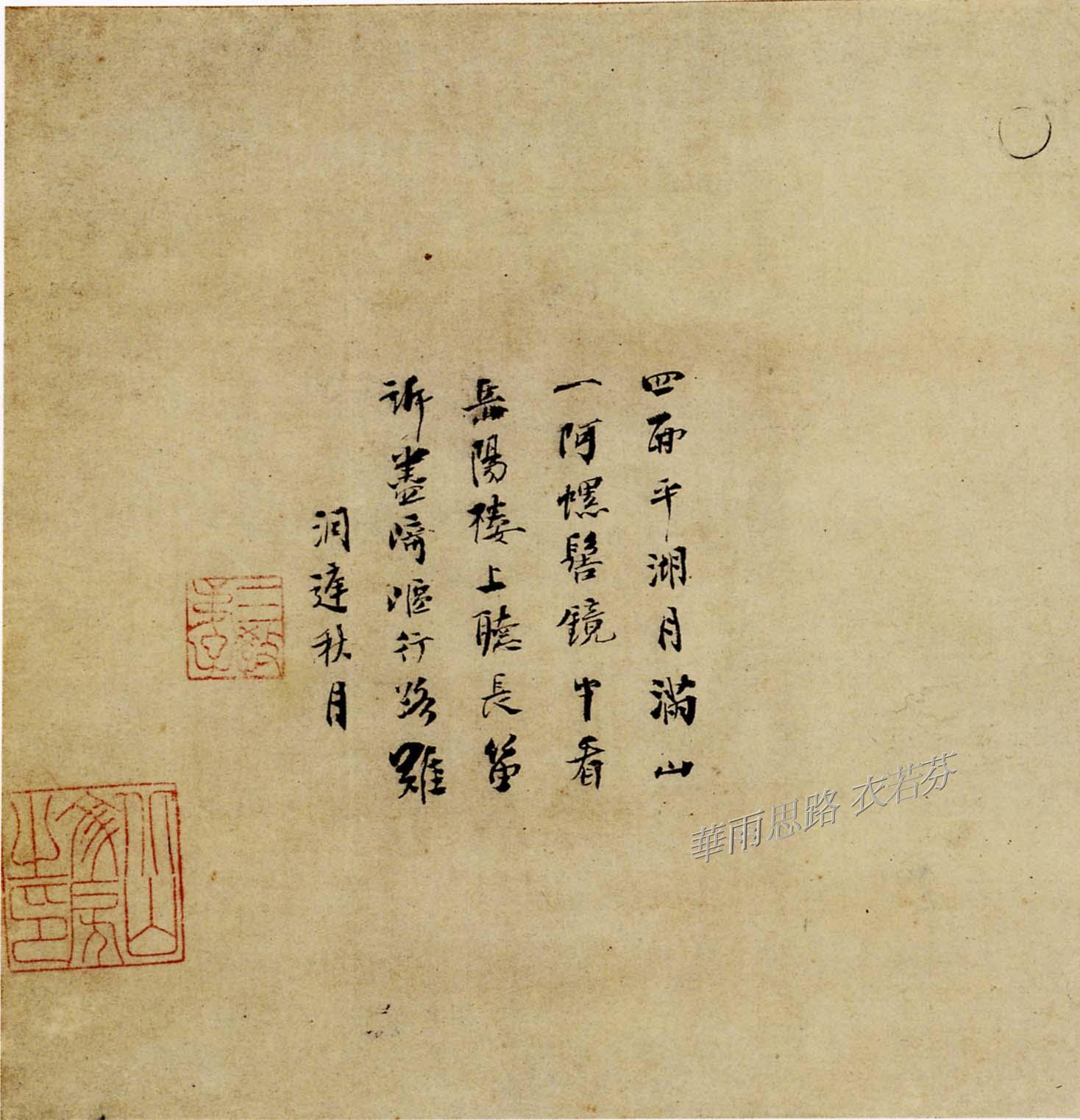
玉澗「瀟湘八景圖」東渡日本之前──「三教弟子」印考


玉澗「瀟湘八景圖」之「洞庭秋月」(局部)


宋末元初畫僧玉澗所繪的「瀟湘八景圖」,大約在十四世紀末至十五世紀初流傳到日本。


在玉澗的「瀟湘八景圖」上,各幅均鈐有「三教弟子」朱文方印,其中「瀟湘八景」之「洞庭秋月圖」上除了「三教弟子」印章之外,還有一枚「北山文房之印」,兩枚印章的歸屬一直未有定論。


筆者者發現在比玉澗的時代稍晚的書法家鮮于樞(1246-1302)的作品上,鈐蓋了字體和大小與玉澗「瀟湘八景圖」中一模一樣的「三教弟子」印,從而探討鮮于樞自稱「三教弟子」的原因。


經由研究南宋至元代,環繞於浙江杭州與金華,以鑑賞書畫為共同雅好的文人文化圈,推想「北山文房之印」的主人,或許是與鮮于樞往來密切的郭天錫(約1227-1302)。


自從現身於日本將近六百年來,玉澗「瀟湘八景圖」東渡之前的一段收藏經歷,在本文中得到了初歩的解析。


《台灣大學美術史研究集刊》第24期(2008年3月),頁147-174。


Yu Jian’s Painting Eight Views of Xiao-Xiang Prior to Being Brought to Japan: A Study of the “Sanjiao Dizi” Seal

The late Song early Yuan Dynasty Buddhist monk painter Yu Jian’s(玉澗) painting Eight Views of Xiao-Xiang made its way to Japan during the late 14th and early 15th centuries.


The vermillion inked square seal which reads “Sanjiao Dizi”(三教弟子, Three Religions Disciple) can be found on each of Yu Jian’s Eight Views of Xiao-Xiang. Among the Eight Views, the painting Fall Moon on Dongting Lake, not only has a “Sanjiao Dizi” seal, but also a seal which reads “Beishan Wenfang Zhi Yin”(北山文房之印, Northern Mountain Library Seal) .


In this investigation of the “Sanjiao Dizi”, when comparing the Eight Views paintings with the works of Yu Jian’s slightly later contemporary, Xianyu Shu (鮮于樞,1246-1302), it is found that the seal’s lettering and size is exactly the same as that of the “Sanjiao Dizi” seal on Yu Jian’s Eight Views. Thus, these similarities are the reason for a further examination of Xianyu Shu’s self-named “Sanjiao Dizi” (Three Religions Disciple).


Researching the Southern Song/Yuan Dynasty period, in the area encompassing Zhejiang, Hangzhou and Jinhua and using artistic literary appraisals common to learned scholars in local literary circles, one can deduce that the “Beishan Wenfang Zhi Yin” owner may be Xianyu Shu’s close acquaintance Guo Tianxi (郭天錫,about 1227 – 1302).


This paper takes a first step toward analyzing the experiences of Yu Jian’s Eight Views of Xiao Xiang painting in Chinese collections before the work’s sea voyage east to Japan 600 years ago.


Taida Journal of Art History, Taiwan University No.24(March, 2008), pp. 147-174.